Kansas service under K.S.A. § 60-303 to § 60-308. Sheriff, court-appointed server, or return-receipt mail. 105 counties. UIDDA at § 60-228a.
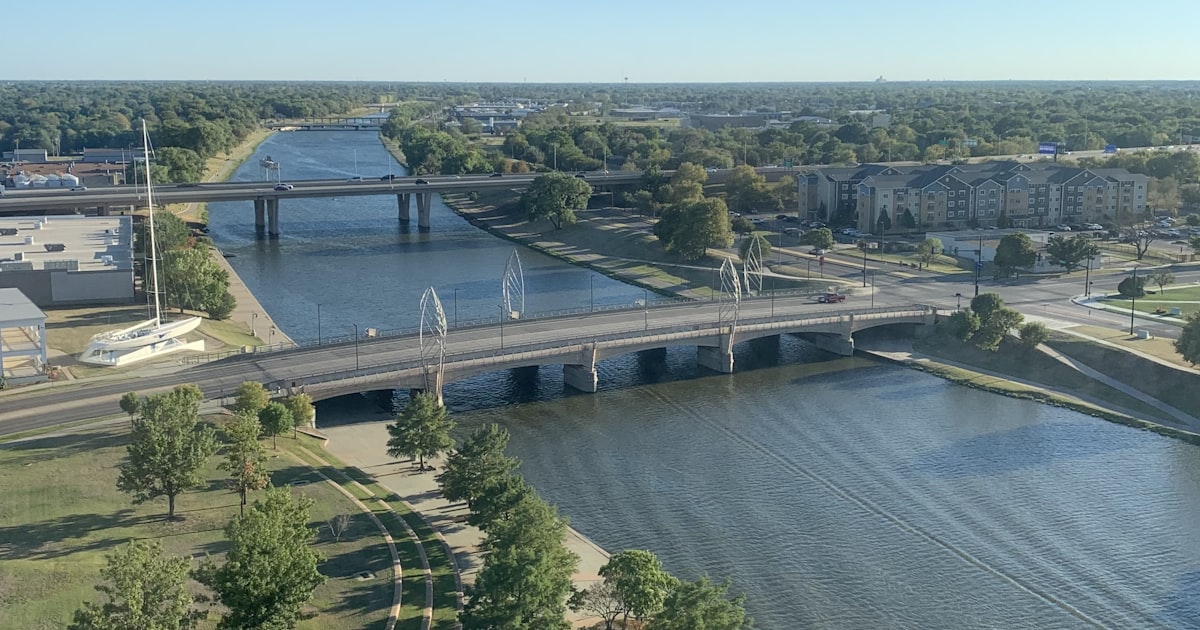
Kansas civil-filing volume is concentrated in Wichita (Sedgwick County, the largest city and home to Wichita State University), the Kansas City metropolitan area spanning Johnson and Wyandotte Counties (with Overland Park and Olathe in Johnson County as the state's economic engine), Topeka (Shawnee County, the state capital and home to the Kansas Supreme Court), and Lawrence (Douglas County, home to the University of Kansas). Kansas has 105 counties — one of the highest counts in the U.S. — organized into 31 judicial districts, more districts-per-county than most states. Service of process is governed by Kansas Statutes Chapter 60, Article 3.
This is practical guidance, not legal advice. Kansas service of process rules are found in the Kansas Code of Civil Procedure, principally K.S.A. § 60-303 through § 60-308. For service of process nationwide, Served 123 LLC handles Kansas and all 49 other states with qualified servers.
Under K.S.A. § 60-303(d), personal service may be made by the sheriff of the county in which the party to be served resides or is found, or by a person authorized to serve process by the court. Kansas is one of the more restrictive states on this point: it requires either sheriff service or court-appointed server designation, and private servers cannot simply act without authorization. Established process-service agencies typically maintain standing court-appointment orders across the major judicial districts to avoid per-case authorization delays.
Personal service under K.S.A. § 60-304(a) is accomplished by delivering a copy of the summons and petition to the individual personally. Kansas permits refused-acceptance service when the papers are tendered and the nature of the documents is clearly identified. Kansas appellate courts have upheld service where the defendant attempted to drive away after being flagged down, and the server placed the papers through the vehicle window while announcing the nature.
Substituted service under K.S.A. § 60-304(a) is made at the individual's dwelling or usual place of abode with some person of suitable age and discretion then residing therein. Kansas interprets "suitable age" as generally 14 or older in practice — a lower threshold than federal practice and many neighboring states. The age flexibility is a practical advantage for service on busy family households where only teenagers may be home during business hours.
K.S.A. § 60-303(c) authorizes service by return-receipt delivery — certified or priority mail with return receipt requested and delivery restricted to the addressee. Service is complete upon delivery shown by the signed return receipt. Kansas has used return-receipt mail service extensively as a first-attempt method for decades, and it remains the statistical default for many types of civil actions. Proper restricted-delivery designation is essential; mail service without that designation has been the basis for motions to quash.
Under K.S.A. § 60-304(e), service on a corporation is made on an officer, partner, managing or general agent, or any other agent authorized by appointment or law. Kansas requires all corporations, LLCs, and partnerships authorized to do business to maintain a resident agent with the Kansas Secretary of State. The Kansas Business Center maintains a public database for resident-agent lookups. If the resident agent cannot be served after due diligence, service may be made on the Secretary of State as statutory agent.
K.S.A. § 60-308 governs out-of-state service under Kansas's long-arm statute — one of the most detailed long-arm statutes in the country, enumerating specific grounds for jurisdiction. Service outside Kansas is made in any manner prescribed for in-state service, or in accordance with the law of the place where service is made.
Service by publication under K.S.A. § 60-307 requires a court order based on affidavit demonstrating that the defendant cannot be served in person and that reasonable efforts have been exhausted. Publication runs once a week for three consecutive weeks in a newspaper authorized to publish legal notices in the county where the action is pending. Not every newspaper is so authorized; Kansas maintains a publication list at the county level.
Kansas adopted the Uniform Interstate Depositions and Discovery Act at K.S.A. § 60-228a, effective July 1, 2010 (L. 2010, ch. 135, § 1) — an early UIDDA adopter. Out-of-state litigants present the foreign subpoena to the clerk of the Kansas district court in the county where the witness resides, is employed, or regularly transacts business. The Sedgwick County and Johnson County District Courts see the largest shares of UIDDA filings.
Kansas has no fixed 90-day service rule. K.S.A. § 60-203 requires service within a reasonable time after filing, and Kansas courts apply a diligent-prosecution standard. Dismissal for failure to serve is discretionary and tied to the docket-management practices of the judicial district where the action is pending.
The return of service under K.S.A. § 60-312 must be filed promptly with the clerk. The proof must state the date, time, manner, and location of service, and for substituted service must identify the person served. Returns from return-receipt mail consist of the signed green card filed with a brief affidavit of mailing.
Served 123 LLC coordinates licensed process servers across every county in Kansas, from Wichita and the Sedgwick County metro through Overland Park, Olathe, and the Johnson County suburbs of Kansas City, plus Topeka, Lawrence, Manhattan, Salina, Hutchinson, Garden City, and the rural western counties. We maintain standing court-appointment orders in the major judicial districts, handle return-receipt mail service with proper restricted-delivery designation, coordinate sheriff service where local custom requires, file K.S.A. § 60-307 publication motions with diligence affidavits, and return court-ready proofs of service promptly to the issuing district court.
Need Kansas service of process handled? Visit our Kansas service of process page for pricing, coverage details, and a free quote.
No. Kansas, like every other state, prohibits parties from serving their own process. The server must be an adult non-party or an authorized officer/licensed server per Kansas rules.
Kansas has no fixed 90-day deadline. K.S.A. § 60-203 requires service within a reasonable time after filing and applies a diligent-prosecution standard. Dismissal for failure to serve is discretionary and tied to the judicial district's docket-management practices.
Yes, Kansas has robust return-receipt mail service under K.S.A. § 60-303(c) — certified or priority mail with return receipt requested and restricted delivery. It's been a workhorse first-attempt method for decades. Restricted-delivery designation is essential; mail without that designation has been the basis for successful motions to quash.
Service on a corporation in Kansas is made on an officer, partner, managing or general agent, or any other authorized agent under K.S.A. § 60-304(e). All corporations, LLCs, and partnerships must maintain a resident agent with the Kansas Secretary of State. If the resident agent cannot be served after due diligence, the Secretary of State serves as statutory agent.
Kansas follows the majority refused-acceptance rule. The server may place the papers in the defendant's immediate presence after identifying the nature of the documents. Service is valid despite refusal.
Yes. K.S.A. § 60-308 governs out-of-state service under Kansas's long-arm statute — unusually detailed, enumerating specific grounds for jurisdiction. Service outside Kansas is made in any manner prescribed for in-state service, or in accordance with the law of the place where service is made.
Start with a skip trace, then move for service by publication on a court order supported by an affidavit documenting diligent inquiry. Publication runs once a week for three consecutive weeks in a newspaper of general circulation in the county where the action is pending.