Hawaii service under Haw. R. Civ. P. 4. Non-party adult; licensed servers handle island logistics. UIDDA at Haw. Rev. Stat. § 624C-1 et seq.
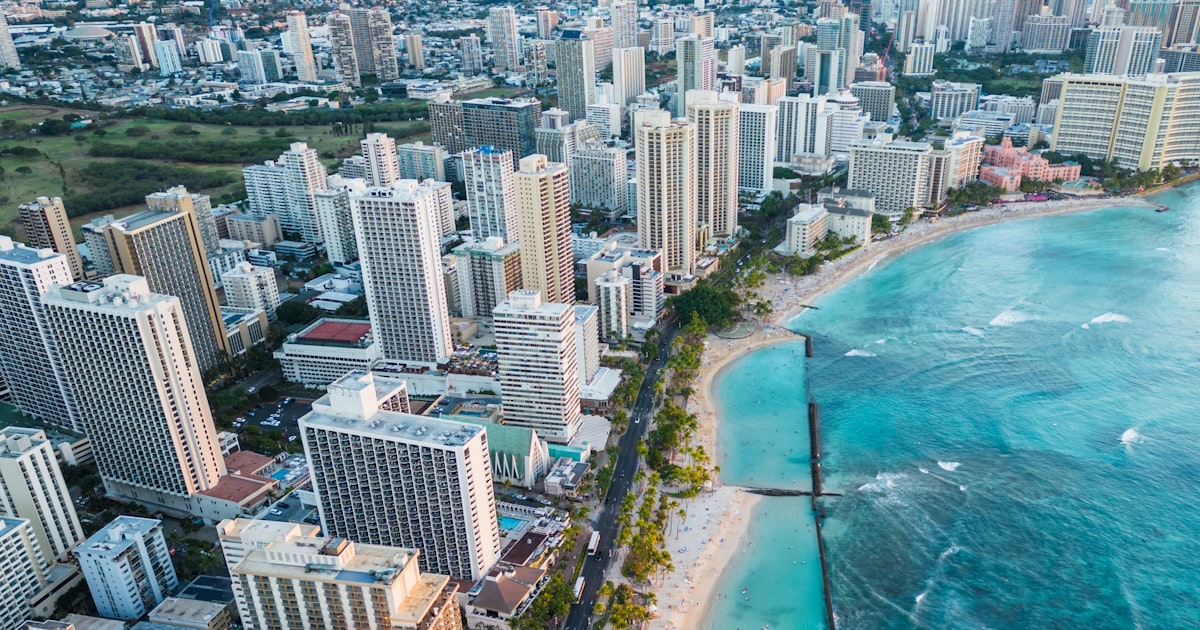
Hawaii's civil-filing volume is concentrated in Honolulu (City and County of Honolulu, covering Oahu) — home to the state legislature, the Hawaii Supreme Court, the U.S. District Court for the District of Hawaii, and approximately 70% of the state's population. The four remaining counties cover the outer islands: Hawaii County (the Big Island, county seat in Hilo), Maui County (including Maui, Molokai, and Lanai; county seat in Wailuku), Kauai County (seat in Lihue), and Kalawao County (the small former leprosy settlement on Molokai, still administered separately). Service of process under Haw. R. Civ. P. 4 permits service by any non-party adult and is typically performed by licensed private process servers given Hawaii's island geography — service across islands requires air travel or inter-island shipping, and logistics-savvy servers coordinate cost-effectively.
This is practical guidance, not legal advice. Hawaii service of process rules are found in the Hawaii Rules of Civil Procedure, principally Haw. R. Civ. P. 4, and the Hawaii Revised Statutes provisions for publication and UIDDA. For service of process nationwide, Served 123 LLC handles Hawaii and all 49 other states with qualified servers.
Haw. R. Civ. P. 4(c) permits service by any person who is at least 18 years of age and not a party to the action. The sheriff or authorized agent of the sheriff may also serve. Hawaii has an active private process server industry concentrated on Oahu but with established networks on Maui, Kauai, and the Big Island. For inter-island service, established agencies typically coordinate a single server per island rather than shuttling one server across water, which both speeds service and reduces cost.
Personal service under Haw. R. Civ. P. 4(d)(1) is accomplished by delivering a copy of the summons and complaint to the individual personally. Hawaii follows the refused-acceptance rule: if the defendant refuses the papers after being clearly informed, the server may place them in the defendant's proximity and identify the contents. Hawaii appellate courts have upheld service where the defendant refused to open the screen door but the server identified the nature of the documents through the door.
Hawaii substituted service at the abode under Haw. R. Civ. P. 4(d)(1) requires a resident of suitable age and discretion — typically at least 18 years old in practice. Hawaii courts scrutinize "usual place of abode" carefully given transient tourism-related housing patterns. A short-term vacation rental, timeshare, hotel room, or seasonal visitor's housing generally does not qualify as a usual place of abode. The affidavit should identify the person served, state the basis for believing they reside at the dwelling, and describe the relationship to the defendant.
Hawaii permits service by mail under Haw. R. Civ. P. 4(d)(4) in specified circumstances with return receipt requested. Mail service is most commonly used for service on corporations, partnerships, and government entities rather than as a first-attempt method for individuals. For individual defendants, the physical realities of Hawaii (multiple addresses across islands, extensive military and tourist transient populations) generally favor personal service by a local process server over mail.
Under Haw. R. Civ. P. 4(d)(3), service on a corporation is made on an officer, managing or general agent, or any other agent authorized by appointment or law to receive service. Hawaii Revised Statutes Chapter 414 requires all corporations authorized to do business in Hawaii to maintain a registered agent with the Department of Commerce and Consumer Affairs (DCCA). The DCCA's business-registration database is publicly searchable and is the standard reference for registered-agent lookups.
Haw. R. Civ. P. 4(e) permits service outside Hawaii under the long-arm jurisdiction provisions of Haw. Rev. Stat. § 634-35. Service is made in the manner provided for service within Hawaii or as prescribed by the law of the place where service is made. For service abroad (including the many Hawaii defendants with ties to Japan, the Philippines, Korea, and Polynesia), Hague Convention procedures apply.
Service by publication under Haw. Rev. Stat. § 634-23 requires a court order based on affidavit showing that the defendant cannot be served personally after diligent inquiry. Publication runs once a week for four consecutive weeks in a newspaper published in the circuit where the action is pending. On the Big Island, publication is typically in the Hawaii Tribune-Herald (Hilo) or West Hawaii Today (Kailua-Kona); on Maui, The Maui News; on Kauai, The Garden Island; and on Oahu, the Honolulu Star-Advertiser.
Hawaii adopted the Uniform Interstate Depositions and Discovery Act at Haw. Rev. Stat. § 624C-1 et seq., effective 2012. Out-of-state litigants seeking discovery from a Hawaii witness present the foreign subpoena to the clerk of the circuit court in the circuit where the witness resides, is employed, or regularly transacts business. The First Circuit Court (Oahu) handles the majority of UIDDA filings given Honolulu's concentration of witnesses, professionals, and corporate records.
Hawaii has no fixed rule equivalent to the federal 90-day service deadline. Service must be made within a reasonable time, and Haw. R. Civ. P. 4(i) permits the court to dismiss a case for failure to prosecute. The practical timing constraint in Hawaii is often scheduling with inter-island servers and accommodating neighbor-island court calendars.
The return of service under Haw. R. Civ. P. 4(g) must state the date, time, place, and manner of service, and must be signed under oath by the server. For substituted service at the abode, the affidavit must identify the person served and describe the residency relationship. Hawaii return-of-service affidavits are filed with the clerk of the circuit court where the action is pending.
Served 123 LLC maintains networks on every major Hawaiian island — Oahu (Honolulu, Pearl City, Kailua, Waipahu), Maui (Wailuku, Kahului, Lahaina), Kauai (Lihue, Kapaa), and the Big Island (Hilo and Kailua-Kona). We coordinate inter-island logistics efficiently, handle personal service at residential and resort addresses, corporate service through DCCA registered-agent searches, publication in the correct circuit newspaper, long-arm service under Haw. Rev. Stat. § 634-35, and court-ready affidavits filed promptly with the issuing circuit court.
Need Hawaii service of process handled? Visit our Hawaii service of process page for pricing, coverage details, and a free quote.
No. Hawaii, like every other state, prohibits parties from serving their own process. The server must be an adult non-party or an authorized officer/licensed server per Hawaii rules.
Hawaii has no fixed 90-day deadline. Service must be completed within a reasonable time, and Haw. R. Civ. P. 4(i) permits dismissal for failure to prosecute. The practical constraint is inter-island logistics — budget for air travel or shipping when planning service on neighbor-island defendants.
Yes, Haw. R. Civ. P. 4(d)(4) permits service by mail in specified circumstances with return receipt requested. Mail service is most commonly used for corporate and government-entity service rather than for individuals — Hawaii's transient tourism-related housing patterns make personal service by local servers more reliable than mail for individual defendants.
Service on a corporation in Hawaii is made on an officer, managing or general agent, or registered agent under Haw. R. Civ. P. 4(d)(3). Haw. Rev. Stat. Chapter 414 requires all corporations to maintain a registered agent with the Hawaii Department of Commerce and Consumer Affairs (DCCA). The DCCA business-registration database is the authoritative public source.
Hawaii follows the majority refused-acceptance rule. The server may place the papers in the defendant's immediate presence after identifying the nature of the documents. Service is valid despite refusal.
Yes. Haw. R. Civ. P. 4(e) permits service outside Hawaii under the long-arm jurisdiction of Haw. Rev. Stat. § 634-35. Service is made in the manner provided for in-state service or as prescribed by the law of the place where service is made. For service abroad — common with Pacific Rim defendants — Hague Convention procedures apply.
Start with a skip trace, then move for service by publication on a court order supported by an affidavit documenting diligent inquiry. Publication runs once a week for four consecutive weeks in a newspaper of general circulation in the county where the action is pending.